Peripheral arterial disease restricts blood flow to your legs.
When the arteries in your legs narrow with plaque buildup, walking becomes painful — and in advanced cases, tissue starts to die. Early treatment restores circulation and prevents amputation.
What PAD is — and why it's urgent
Peripheral arterial disease (PAD) develops when fatty deposits and plaque build up inside the arteries that supply your legs and feet. Less blood reaches the muscles and skin. At first, you might just feel cramping when you walk. As the disease progresses, that cramping appears with less and less activity — and eventually at rest.
PAD is more than a leg problem. The same plaque process that narrows your leg arteries is usually happening in your heart and brain arteries too. Diagnosing PAD often catches systemic atherosclerosis before it causes a heart attack or stroke.
The most serious complication is critical limb ischemia — when blood flow drops so low that tissue starts to die.
At that stage, restoring circulation quickly is the difference between keeping the limb and losing it.
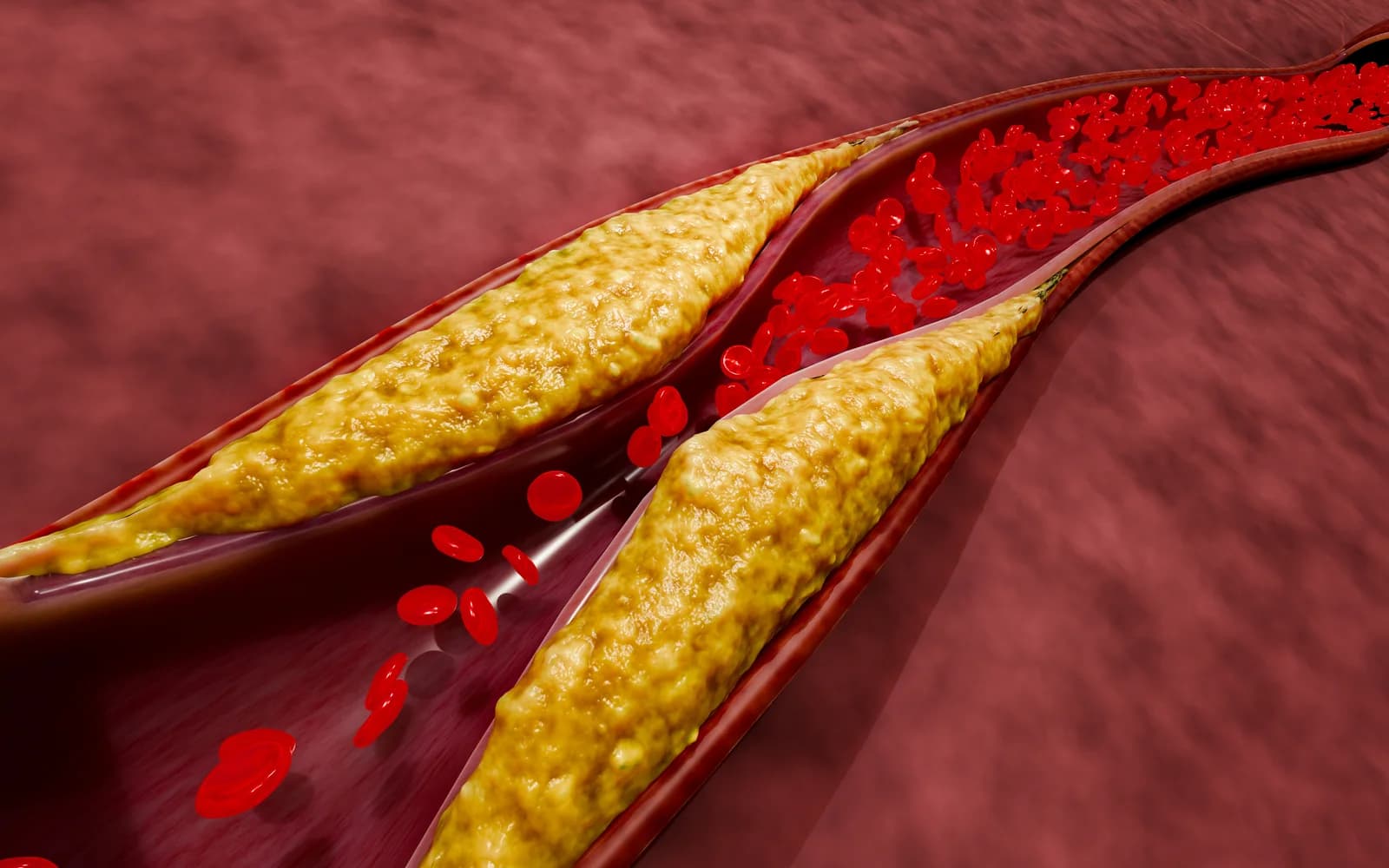
Plaque narrows the channel
Peripheral arterial disease is driven by atherosclerosis — fatty plaque building up inside the artery wall. As the plaque thickens, the open channel (lumen) the blood flows through gets narrower and narrower, starving the leg of oxygen.
Reopening that channel is exactly what arterial angioplasty does — restoring flow through a small puncture, with no open surgery.
Signs of PAD
Time is tissue.
The progression from intermittent claudication (pain with walking) to critical limb ischemia (pain at rest, non-healing wounds, gangrene) is the most preventable amputation pathway in medicine. Catching PAD early — before tissue is irreversibly damaged — lets us restore circulation through a small puncture in the leg, often without any incision at all.
Dr. Anton's training in interventional nephrology specifically prepares him for the intersection of vascular and kidney disease — a population at the highest risk for PAD and for the worst outcomes from delayed care.
Evaluation and minimally invasive repair
Diagnosis starts with a non-invasive arterial study — a series of blood pressure readings and ultrasounds taken at different levels of the leg. If significant blockages are found, an angiogram maps them precisely. Most blockages can be opened through arterial angioplasty: a thin catheter slipped through a small puncture in the groin, balloons opened where needed, and stents placed in selected cases.
Procedures are performed in our Pompano Beach office. Patients typically go home the same day with a small bandage at the puncture site and walk with less pain almost immediately. Lifestyle changes, blood pressure control, and medication for atherosclerosis are part of the long-term plan.
Frequently asked questions
What is peripheral arterial disease (PAD)?
PAD develops when fatty plaque builds up inside the arteries supplying your legs and feet, so less blood reaches the muscles and skin. Early on it causes cramping when walking; as it progresses, pain can occur with less activity and eventually at rest.
Why is PAD considered urgent?
The same plaque process usually affects the heart and brain arteries too, so PAD can signal risk of heart attack or stroke. Its most serious complication, critical limb ischemia, is when blood flow drops so low that tissue begins to die.
What are the warning signs of PAD?
Cramping in the calf, thigh, or buttock when walking; cold feet; numbness or weakness in one leg; pale or shiny skin; slow-healing foot sores; and foot or toe pain at rest, especially at night.
Who is most at risk for PAD?
PAD is significantly more common in people with diabetes, high blood pressure, kidney disease, or a history of smoking. Anyone in those groups with leg symptoms should get screened.
How is PAD treated?
After a non-invasive arterial study and, if needed, an angiogram, most blockages are opened with arterial angioplasty through a small puncture — no open surgery. Patients typically go home the same day and walk with less pain almost immediately.
answers?