VenaSeal closure system.
A non-thermal, non-tumescent venous closure procedure that uses a proprietary medical adhesive to seal diseased veins — no heat, no compression stockings, and most patients walk out and resume normal activity immediately.
- OUTPATIENT
- 30–45 MIN
- MINIMAL ANESTHESIA
- NO COMPRESSION STOCKINGS
- NO OVERNIGHT STAY
- INSURANCE COVERED
Closing failed veins without heat
VenaSeal™ is the first and only non-thermal, non-tumescent treatment for symptomatic venous reflux. Instead of heat, it uses a specially-formulated medical adhesive to seal the diseased vein closed. Blood automatically reroutes through adjacent healthy veins.
Because no heat is involved, there's no need for the multiple anesthetic injections used in thermal procedures — and no risk of nerve injury that occasionally accompanies heat-based treatments. Most patients walk out without compression stockings.
The first and only non-thermal, non-tumescent venous closure treatment cleared by the FDA.
See the procedure
A short medical animation showing how the VenaSeal catheter delivers precise aliquots of medical adhesive to close the failed vein.
The procedure, step by step
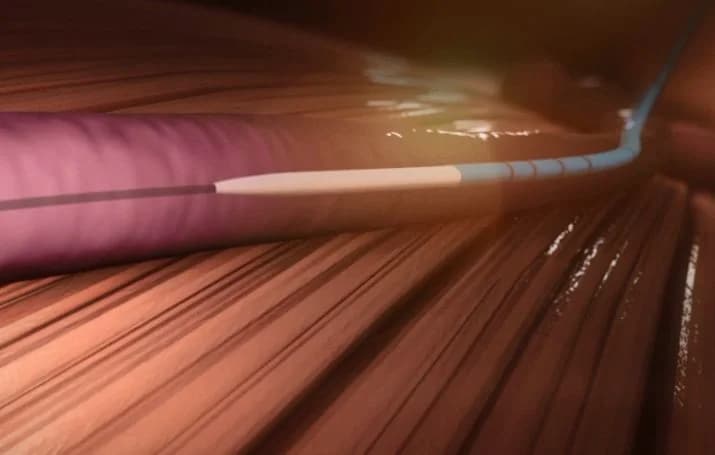
Mapping the diseased segment
Using high-resolution ultrasound, the delivery catheter is advanced through a single small puncture to the precise starting point of the failed vein. The same ultrasound guides every step of the procedure — there's no need for X-ray imaging or contrast dye.
Precise, segment-by-segment closure
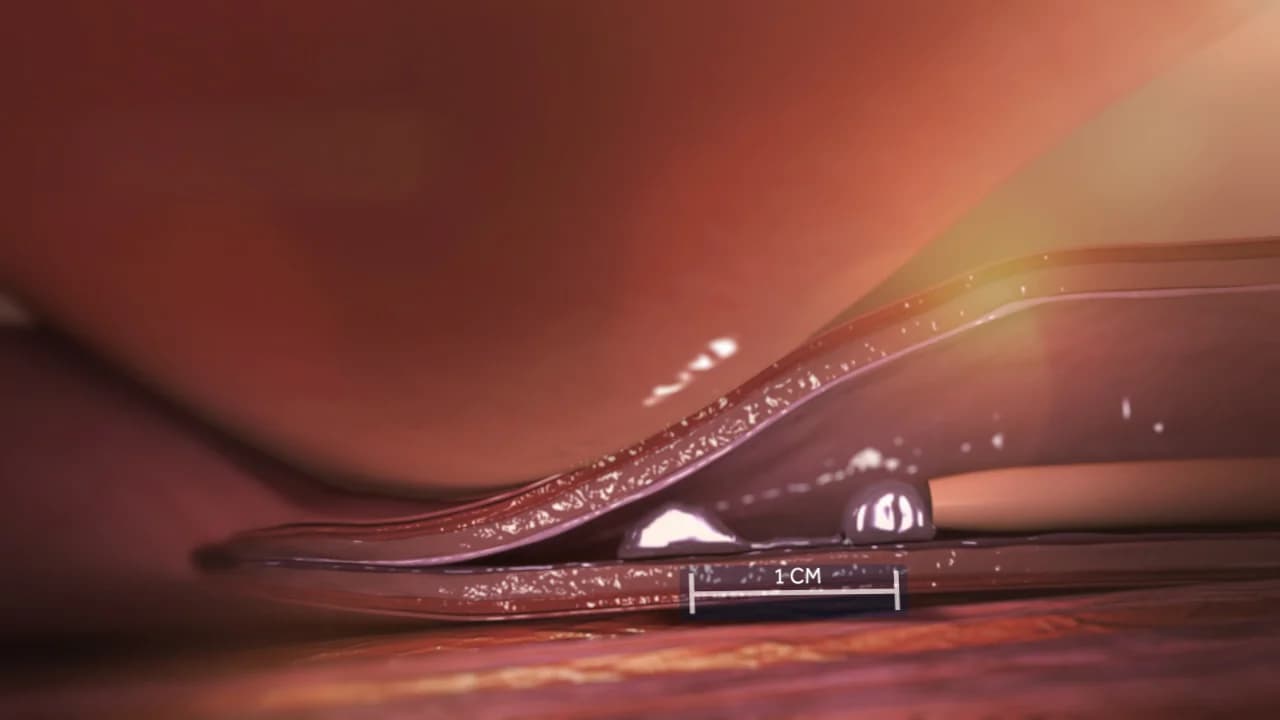
Once positioned, the catheter delivers small, precisely measured aliquots of the VenaSeal medical adhesive at fixed intervals along the vein. External ultrasound compression holds the vein walls together while the adhesive bonds them shut.
The result: an immediate, durable closure of the entire diseased segment — without heat and without injecting a tumescent anesthetic field around the vein.
Hear from real VenaSeal patients
Two short video conversations with patients who had the VenaSeal procedure — their experience before treatment, what it was like during, and how they felt afterward.
Immediate return to activity
The procedure usually takes about 30 minutes. Because no heat is used, there's no tumescent anesthesia, no need for compression stockings afterward, and no required downtime. Most patients walk out and resume normal activity the same day — including light exercise.
Mild bruising at the access site is the most common after-effect. Symptoms — heaviness, aching, swelling — usually begin improving within days as venous pressure normalizes.
answers?