Vein disease progresses in stages.
Most patients don't realize how far the progression goes. The earlier you intervene, the easier the treatment — and the lower the risk of permanent skin damage.
A spectrum, not a snapshot
Venous disease is rarely a single problem with a single fix. It's a slowly progressing mechanical failure — valves give out one by one, and the consequences cascade downstream through the skin and tissue. Recognizing which stage you're in tells you how urgent treatment is and what kind of recovery to expect.
The international standard for classifying vein disease is the CEAP system. We've translated the clinical categories into plain English below so you can locate yourself on the map — and decide what to do next.
The five stages
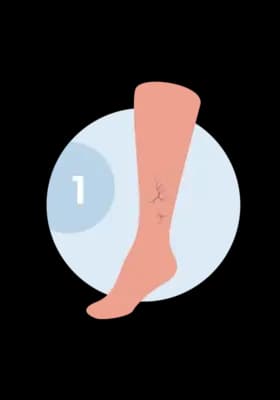
Spider Veins
Tiny surface capillaries visible as thin red or purple lines beneath the skin. Mostly cosmetic but signal that venous pressure is beginning to build.
Early stage — screening recommendedEven mild symptoms can indicate underlying venous pressure. A quick screening gives you a clear answer.Schedule a free screening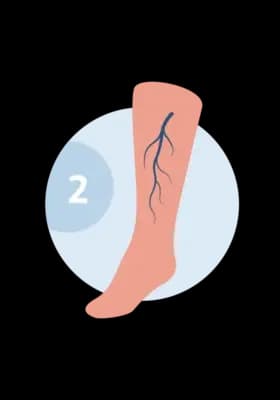
Reticular Veins
Larger blue-green feeder veins just beneath the skin surface. Not yet bulging but feeding the spider vein network and indicating progressive valve weakness.
Monitor closely — screening advisedReticular veins often feed larger varicose networks. Catching this early means simpler, faster treatment.Request a consultation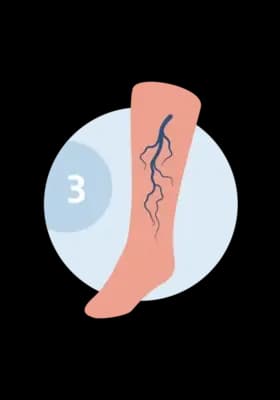
Varicose Veins
Bulging, twisted veins caused by failed valves allowing blood to pool. A medical condition — not cosmetic. Dr. Anton recommends treatment at this stage.
Dr. Anton treats thisVaricose veins won't reverse on their own. Minimally invasive ablation closes the failing vein in a single outpatient visit.Book a treatment consultation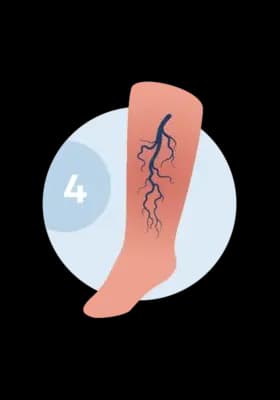
Chronic Venous Insufficiency
Advanced venous disease with severe vein enlargement, chronic swelling, and skin changes. Tissue damage begins at this stage and may become permanent without intervention.
Urgent treatment neededSkin and tissue damage at this stage can become permanent. Treating the underlying reflux is the only way to stop the progression.Request an urgent evaluation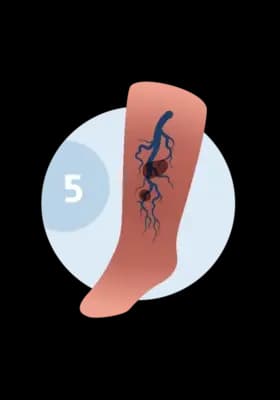
Trophic Ulcers
Open, non-healing wounds caused by years of untreated venous disease. Require intensive wound care. Almost entirely preventable with Stage 3 intervention.
Prevent thisVenous wounds rarely close without treating the underlying vein disease. Wound care alone is not enough — the reflux has to be fixed.Get specialist careFind out in 2 minutes
Our quick assessment helps identify where you are in the progression — and what to do next.
How long have you had visible veins or leg discomfort?
Each stage is harder to reverse.
A stage-3 patient (varicose veins) walks out of an outpatient ablation procedure and back into normal life in a week. A stage-5 patient (open trophic ulcer) may need months of wound care along with the venous procedure — and the scar tissue often remains.
Catching disease early isn't just less expensive and less painful, it preserves the skin and tissue you have.
Frequently asked questions
What are the stages of vein disease?
Vein disease progresses through stages — spider veins, reticular veins, varicose veins, chronic venous insufficiency, and finally trophic (open) ulcers — following the international CEAP classification.
How do I know which stage I'm in?
Each stage has distinct signs, from cosmetic surface veins to bulging varicose veins to skin changes and open wounds. A quick screening or duplex ultrasound gives you a clear answer.
At what stage should vein disease be treated?
Dr. Anton recommends treatment by the varicose vein stage, because the condition won't reverse on its own and earlier intervention prevents skin and tissue damage.
Can late-stage vein disease be prevented?
Yes — trophic ulcers are almost entirely preventable with earlier-stage intervention, since treating the underlying reflux stops the progression.
Why does catching it early matter?
Each stage is harder to reverse than the last. An early-stage patient recovers from an outpatient procedure in about a week, while a late-stage ulcer may need months of wound care, often leaving permanent scarring.
answers?