Venous angioplasty.
A minimally invasive, outpatient procedure that opens narrowed veins and restores healthy blood flow — usually in under an hour, with no incision.
- OUTPATIENT
- 45–60 MIN
- LOCAL ANESTHESIA
- NO OVERNIGHT STAY
- INSURANCE COVERED
- WALK OUT SAME DAY
Reopening the veins your legs depend on
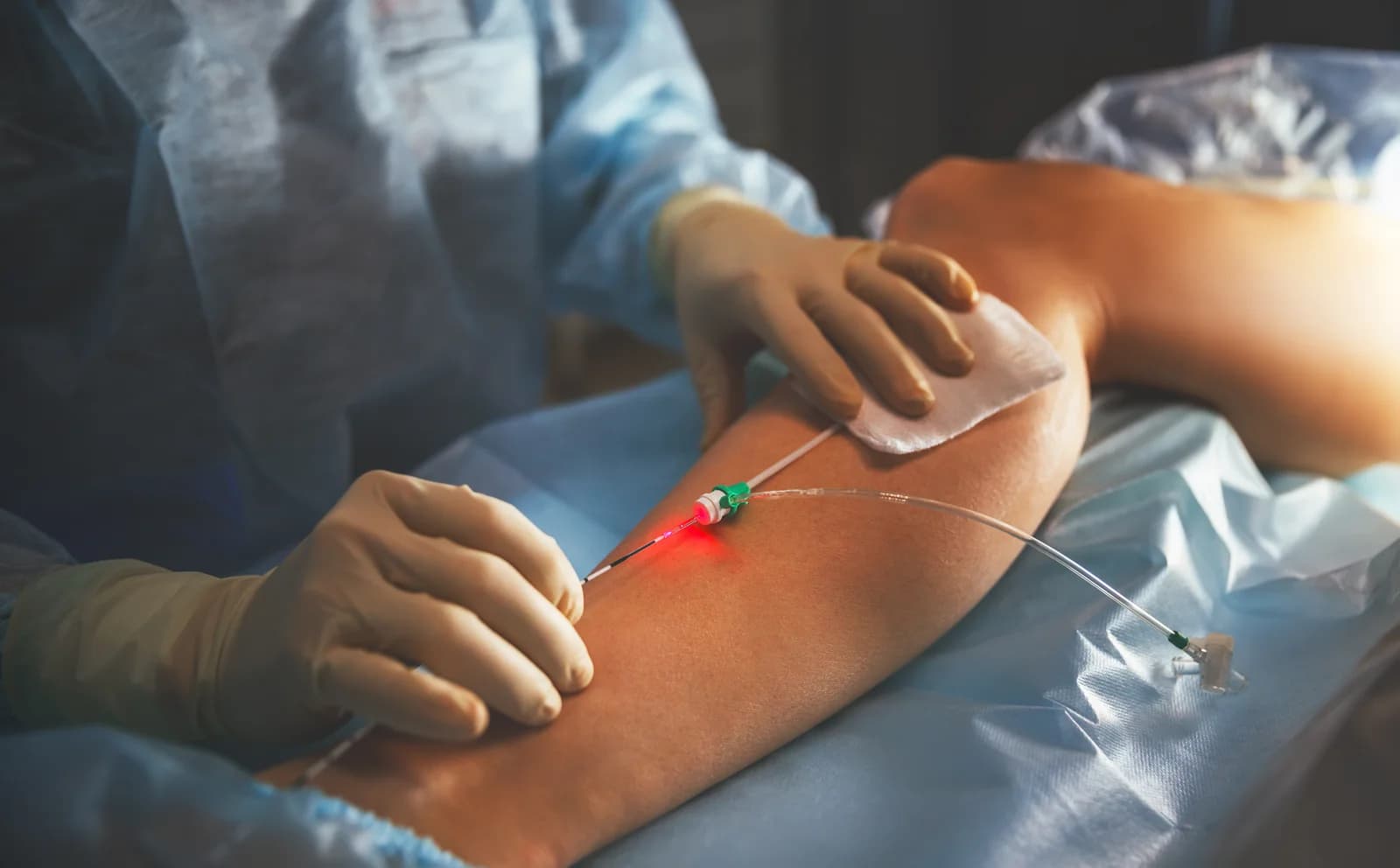
Venous angioplasty is the modern minimally invasive answer to narrowed or blocked veins. A thin catheter slips through a small puncture in the skin, a balloon is inflated inside the problematic segment, and the vein is reopened from the inside. No incision, no scar, no overnight stay.
It's most commonly performed for chronic venous insufficiency, deep venous reflux, post-thrombotic syndrome (after a deep vein thrombosis), and for failing dialysis access — though the technique applies broadly across the venous system.
Outcomes are excellent and durable, especially when paired with appropriate medical therapy.
The procedure, step by step
Experience with the full venous system
Dr. Anton has been performing venous interventions for over 20 years. As an interventional nephrologist, he routinely angioplasties dialysis access — some of the most technically demanding venous work in medicine — and brings that same precision to lower-extremity vein procedures.
From walk-in to walk-out
Plan on about two hours in the office total: an hour of prep and the procedure itself, then a rest period before you go home. We ask that someone drive you, though most patients feel ready to drive themselves within a day. The puncture site heals on its own under a small adhesive bandage.
Mild bruising at the entry point and a sensation of warmth in the treated leg are normal. Symptoms — heaviness, swelling, aching — usually start improving within a week as venous pressure normalizes. Follow-up scans confirm the result and track long-term patency.
A minimally invasive procedure
Venous angioplasty is performed through a small puncture, under local anesthesia, in our Pompano Beach office. A catheter is guided into the narrowed vein and a balloon is inflated to reopen it — with a stent placed in some cases.
There's no incision and no general anesthesia — most patients walk out within an hour and resume normal activity the next day.
answers?