Venous ulcers heal when the root cause is treated.
Wounds near the ankle that won't close, or that keep coming back, are almost always a sign of failed deeper veins — not a skin problem. Treating the vein closes the wound for good.
What a venous ulcer actually is
A venous ulcer is an open sore — usually on the inner ankle — that develops when years of high pressure inside the leg veins damage the surrounding skin and soft tissue. The skin breaks down, and once it does, the wound has no way to heal on its own because the underlying venous backflow keeps pumping fluid and inflammation into the tissue.
Patients are often treated for months by wound care alone: dressings, debridement, compression. Those help, but they treat the surface.
Until the vein problem is fixed, the wound recurs in 70% of cases.
The fix is a minimally invasive outpatient procedure — and the recovery is faster than most patients expect.
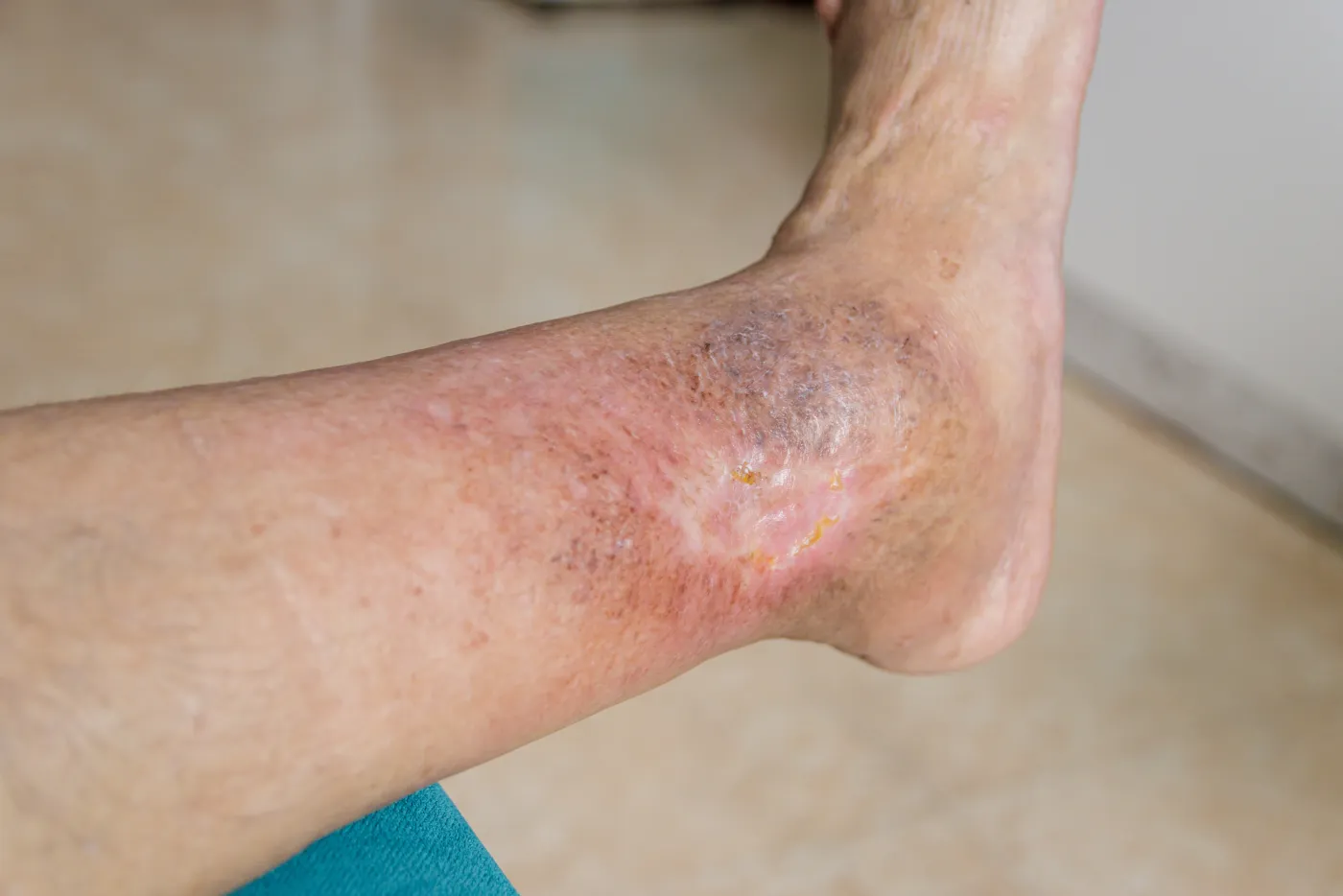
Signs you have a venous ulcer
Wounds heal when the venous pressure stops.
Studies consistently show that closing the failed underlying vein shortens healing time by months and dramatically reduces recurrence. This is what Dr. Anton does: he identifies the culprit vein with ultrasound and closes it in a 30–60 minute outpatient procedure. The skin then has the chance to do what it naturally wants to do — heal.
As both an interventional nephrologist and vascular specialist, Dr. Anton evaluates the whole circulatory picture — kidney function, fluid balance, arterial flow — that affects wound healing. That breadth matters in older patients with multiple conditions, which is most patients with venous ulcers.
From open wound to closed skin
Your first visit includes a duplex ultrasound to map the venous reflux and identify the source vein driving the ulcer. Depending on the case, Dr. Anton performs venous ablation or angioplasty in the office under local anesthesia — usually in under an hour.
Wound care continues during recovery, but most ulcers begin visibly closing within weeks once venous pressure is normalized. Compression therapy and follow-up scans complete the plan. The goal is not just to close the wound but to keep it closed for life.
Frequently asked questions
Why won't my ankle wound heal?
A venous ulcer is usually a sign of failed deeper veins, not a skin problem. The underlying venous backflow keeps pumping fluid and inflammation into the tissue, so the wound can't heal until the vein is treated.
Will a venous ulcer come back?
Until the vein problem is fixed, the wound recurs in about 70% of cases. Closing the failed vein dramatically reduces recurrence.
Is wound care alone enough?
Dressings, debridement, and compression help, but they treat the surface. Studies show that closing the failed underlying vein shortens healing time by months.
How is a venous ulcer treated?
A duplex ultrasound identifies the source vein, then Dr. Anton closes it with venous ablation or angioplasty in a 30-60 minute outpatient procedure under local anesthesia.
How long until the wound closes?
Wound care continues during recovery, but most ulcers begin visibly closing within weeks once venous pressure is normalized.
answers?